

James Smith, Deaf Convict
Curator Darlene Thornton introduces James Smith, a deaf convict who arrived in Australia in 1827.
1827, April
Trial at the Old Bailey
Trial record for James Smith, describing him as “a deaf and dumb boy”. He was convicted of stealing a pocket handkerchief and sentenced to 14 years transportation. It seems he had an interpreter at his trial, as the record states ‘the evidence was communicated to the prisoner by signs’.

1827
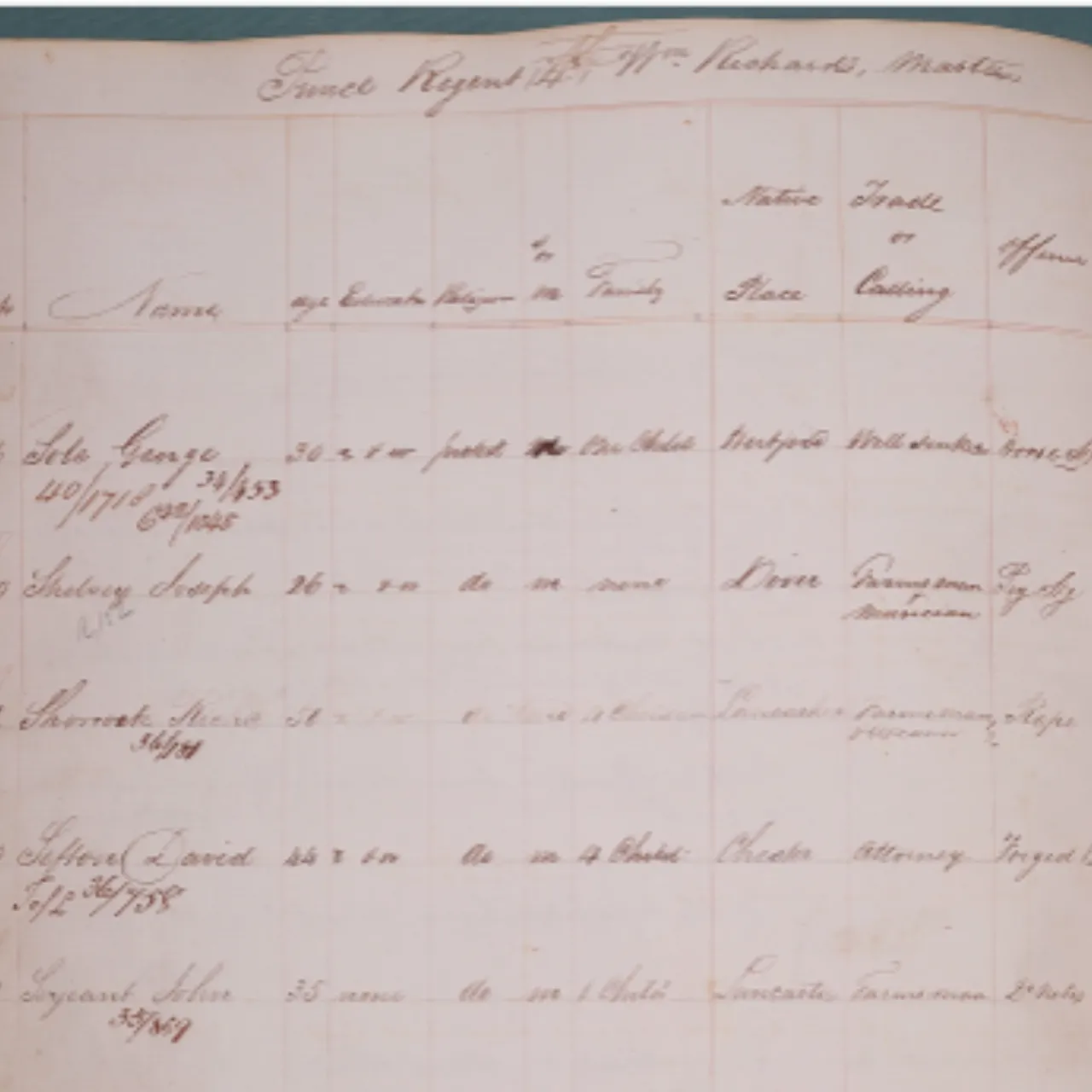
Shipping Indent
This was the list of all the convicts on the ship (the ‘Prince Regent’), and their details. But there are not many details for James Smith – instead of his age, religion, family details, native place, trade and offence, the clerk has just written ‘Deaf and Dumb’. He clearly had difficulty communicating with James! But he has written some descriptive comments about his appearance on the second page – we can compare this with his appearance at the end of his sentence.

1820s and 1830s
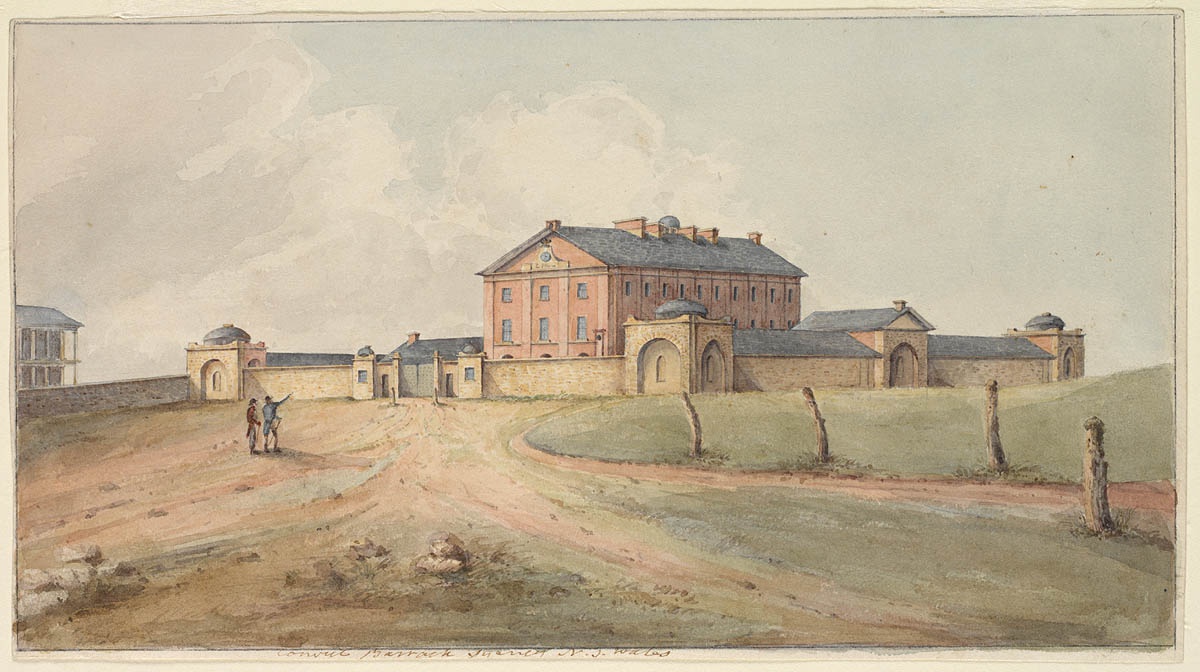
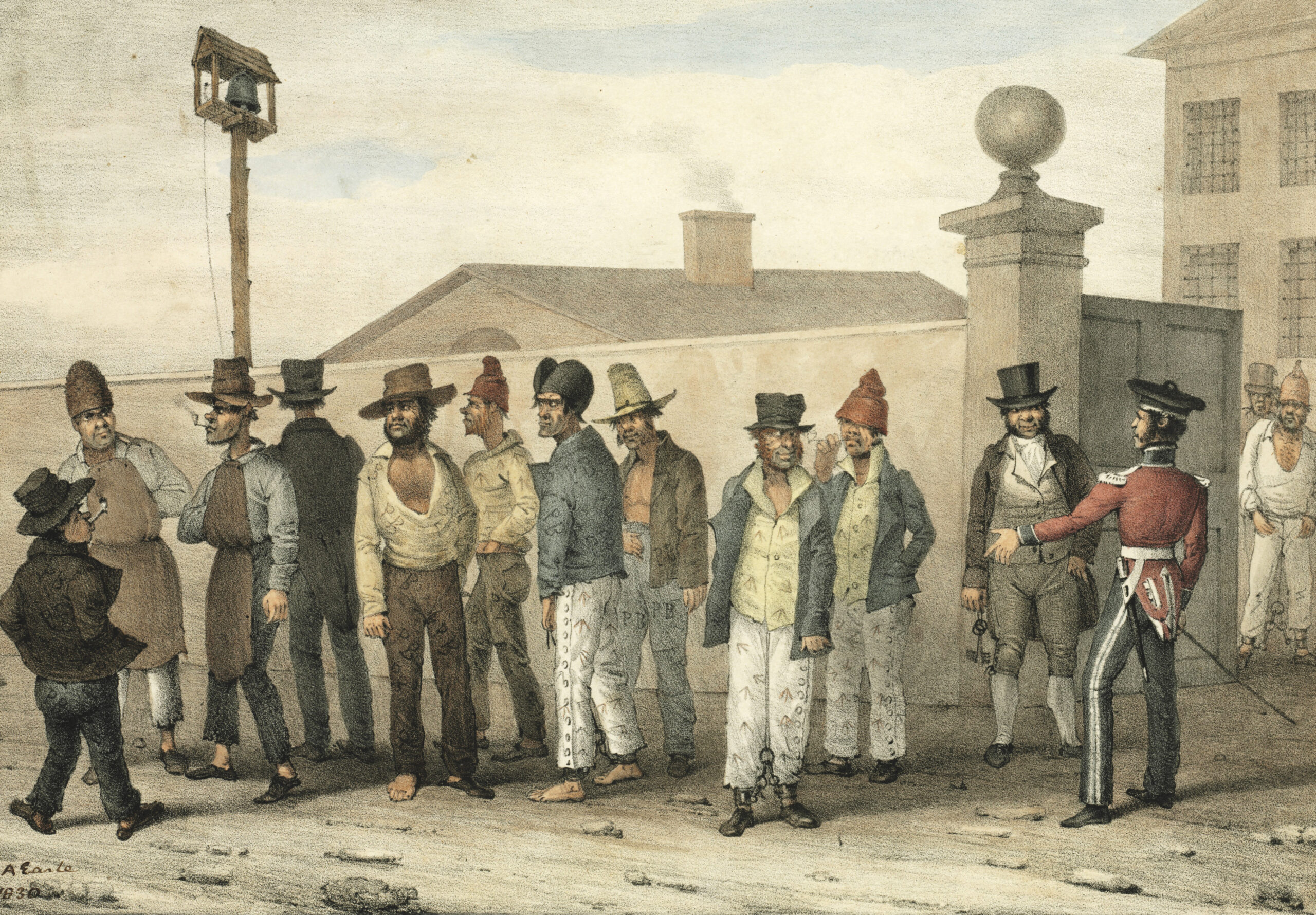
Hyde Park Barracks was the building where most male convicts in Sydney lived (it is now a museum). James Smith lived and worked there during his 14-year sentence.
1835
Running Away
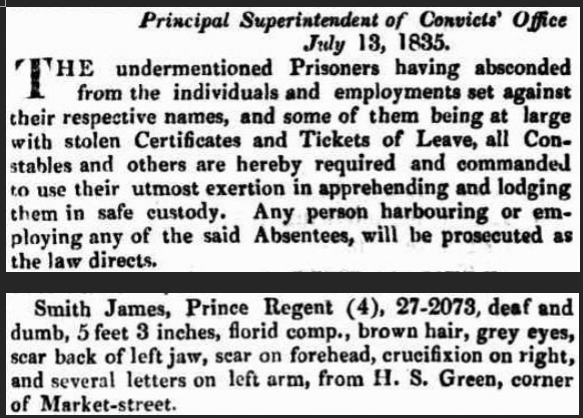
James Smith absconded in 1835. He would have been caught, punished, and returned to Hyde Park Barracks.
1841
Deaf convict James Smith is granted a Certificate of Freedom
At the end of his 14 year sentence, James Smith received a Certificate of Freedom. They still couldn’t communicate with him – check out the information about his ‘Native place’ and ‘Year of Birth’! There is a detailed description of his appearance under ‘General Remarks’, which shows what a rough life he had during his sentence.
A transcript of the description: “Nose thick [probably broken] Lost two front upper teeth Scar left side of upper lip Mark of a burn back of left jaw Scar left side of forehead [The following are tattoos] Crucifix and two human figures on upper Sun half moon seven stars Square and Compass Man and Woman on lower right arm J.T. and heart on upper Mermaid and several letters lower left arm.”


We have not found any more details about James Smith’s life after he received his freedom. We don’t know where he lived, what work he did, when he died, or where he is buried. Let us know if you find out!
Read more
Carty, B. & Thornton, D. (2011). Deaf people in colonial Australia. In T. Hedberg, Ed., No history, no future: Proceedings of the 7th DHI International Conference, Stockholm 2009 (pp.148-155). Solna: Dixa.
King, C. (2019). “Convict Tattoos”. https://www.rahs.org.au/convict-tattoos/

